el sexo como contrario o alivio de la muerte
También esto pasaráThe concept named el sexo como contrario o alivio de la muerte presents sex as a bodily counterforce to death and grief, not as a cure for either. For the narrator, sexual intensity can briefly overwhelm the mind’s fixation on loss and make the body feel vividly alive; when the encounter ends, however, sorrow and memory return with undiminished force. The idea connects the worsening of her mother’s illness, the narrator’s relationship with Santi, and a post-bereavement encounter with her ex-partner Óscar, while insisting on the limits of physical consolation.
Desire During the Illness
Before her mother dies, the narrator’s sexual life becomes entangled with the experience of watching her mother’s illness and dementia grow more severe. She meets Santi in Badalona, in an unprepossessing bar where they eat bad croquettes that nevertheless seem wonderful to them. The encounter belongs to a secret geography of the city: the narrator frames falling for a married man as the reason she discovers such unlikely places. The pleasure of the date sits beside the fact that she has not seen Santi since before her mother’s death, and that the months of her mother’s decline have altered her own intimate life.
The narrator describes sex during this period as an effort to prove, to herself and to the world, that she is still alive. As her mother struggles against illness, sexual relations grow more ferocious, as though the battles taking place in different beds were one and the same. The parallel does not make sex a substitute for her mother’s suffering; it gives the narrator a physical way to answer it. She and her mother seem to be becoming brittle and gray, close to crumbling into dust, even as her mother insists that they are both strong enough to withstand any storm. Sexual intensity thus emerges from despair, but also from a stubborn attempt to resist the deadening effects of exhaustion and anticipatory grief.
Santi’s arrival makes that resistance bodily and immediate. He rides toward the narrator on his bicycle, wearing her faded red jeans and a khaki parka they bought together long ago. She suspects he wears them to please her and as a charm against the storms in their relationship. Seeing him still makes her heart lurch and her pulse quicken. Her mother had teased her for liking handsome men, and the narrator recognizes that her attraction rests on the accidental appeal of appearance rather than on power, intelligence, or money. Desire here is neither a considered solution to grief nor an abstract idea: it registers first as a change in the narrator’s body.
Brief Suspension, Not Escape
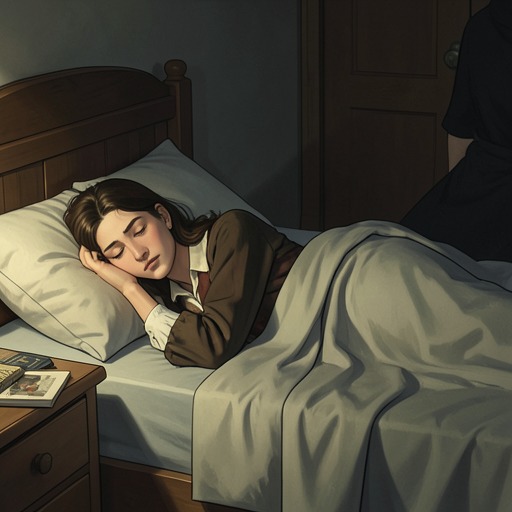
After her mother’s death, sex again interrupts the narrator’s experience of loss, this time in a scene with Óscar, her ex-partner. She wakes beside him in a silent house. Through the open window come children splashing in the pool; outside, the plane trees move peacefully in the light. Their apparent calm sharply contrasts with the narrator’s inward expectation that catastrophe should have transformed the world around her. The scene places ordinary summer life beside bereavement without suggesting that the death has been undone.
The narrator imagines the sexual effect as a tornado that sweeps away furniture, clothes, memories, panic, and sorrow. Its force is decisive but lasts only for moments, or a little longer if sleep follows. When she opens her eyes, the vanished things return to their exact places—in the room, in her mind, and in her stomach. This sequence defines the concept’s central limit: sex can suspend grief’s pressure, but it cannot remove its causes or permanently rearrange the life left behind.
Óscar’s body carries a particular history. The narrator remembers her mother’s immediate recognition of him as the man who belonged in her apartment, and her playful exchange with him when they first met. For a time, Óscar’s body had been the narrator’s only home, the only place in the world; they later had a child, and then came to know one another in a different way. Waking together again, after they have long stopped sleeping together, makes the encounter both physical and historical. Its temporary shelter is formed from an intimacy that once structured a life, but the scene does not claim that sex restores their former relationship.
Grief Beyond the Bedroom
The brief relief gains meaning against the narrator’s continuing need for forms of comfort that sex cannot supply. In the days after her mother’s death, people repeatedly tell her that many others love her. She appreciates the reassurance but does not tell them that she no longer trusts anyone’s love; what she wants is her mother beside her, holding her hand and placing a hand on her forehead. The contrast distinguishes bodily contact as a general source of relief from the specific maternal touch she has lost. Sex can overwhelm awareness for a while, but it cannot reproduce that relationship.
Grief also returns through the family house and its accumulated memories. On its terrace, the narrator recalls generations of ordinary and formative scenes: fruit brought from Barcelona, laundry taken away to be washed, long breakfasts, beach towels drying on the rail, summer evenings, first loves, her first child’s conception, and later visits with children. The routine of meals, boat outings, naps, and card games once persisted even as happiness changed and her mother aged. The morning light and still sea seem to contradict the tragedies that memory has gathered there. In this setting, the narrator’s respite is one movement within a larger alternation between remembering what is lost and continuing to inhabit daily life.
That alternation remains unresolved as the narrator encounters reminders of absence. Patum, the dog, waits outside the mother’s room and searches the house for her scent or some sign that she will return; the narrator recognizes her own search in the animal’s behavior. She fears Patum’s approaching death and feels that the world around her is becoming emptier. Against this continued bereavement, the concept does not promise triumph over death. It gives sex a narrower, more credible significance: for a short time, bodily intensity can interrupt the return of loss, while the lost person, the memories, and the need for other kinds of consolation remain.